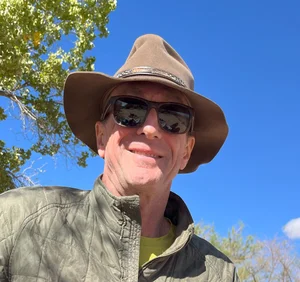
Some things last longer
than you think they will
— B.D.
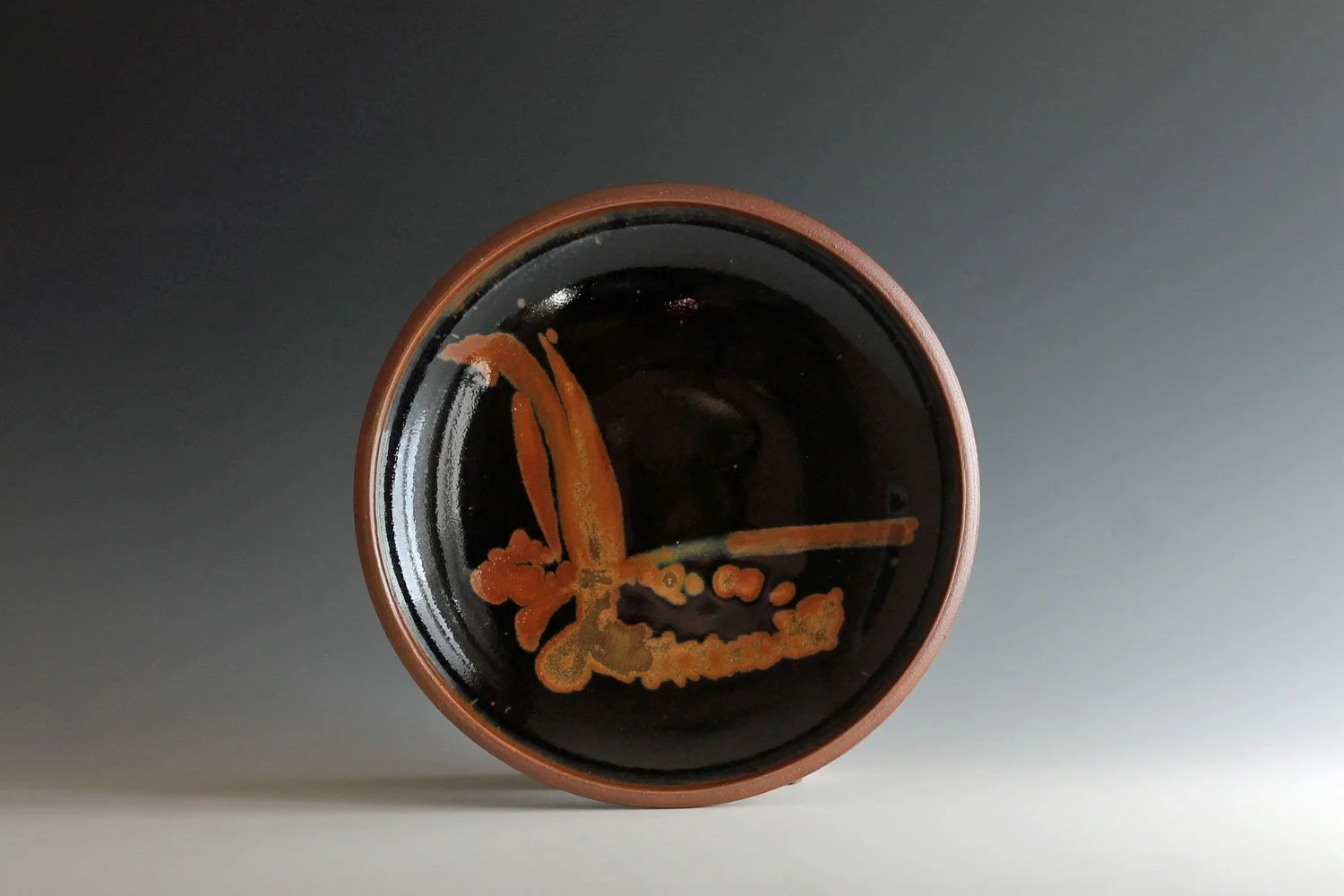
Over the years I've had a few epic stories of kilns, a few adventures. This latest one started so gradually, so quietly, that I was well into the first chapter of it before I realized I was having an adventure at all.
At my home studio I fire with propane. Spring was arriving, usually a time when the price drops, and I was calling around. There are two main companies who deliver out where I am, and since I own my tank I can look for deals. You running any specials? I asked Amerigas. How much for 750 gallons?
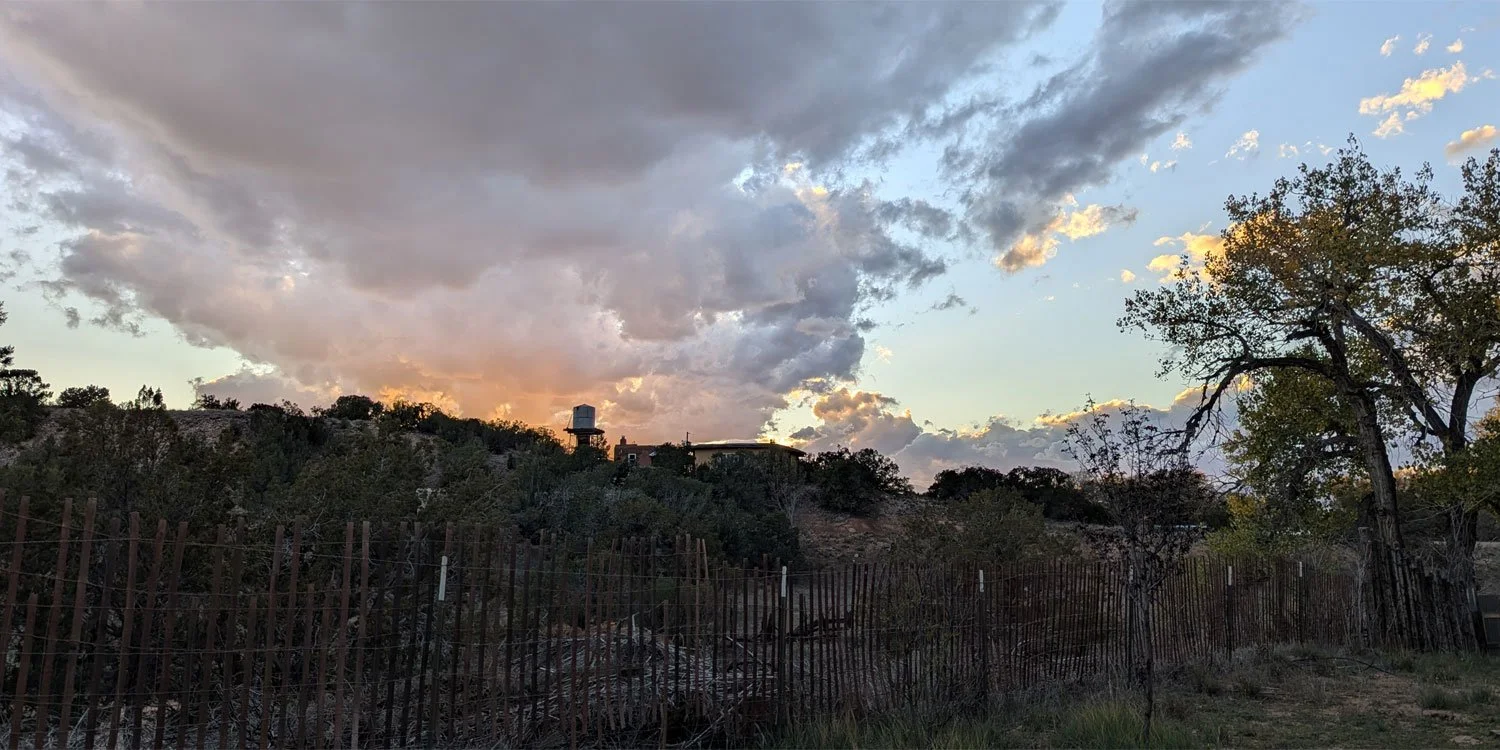
Hmm. The price was not coming down at all. Neither company would budge. Why? Oh that's right. The Strait of Hormuz. Gas prices. I sighed. Well, at least I have a very efficient well-built kiln with recently upgraded valves and controls.
And, I reasoned, if I just keep the gas pressure low, and push the damper in a bit, I can probably still get great reduction and burn less fuel — kind of like driving to Albuquerque at 65 instead of 75 miles per hour. More time on the road, sure — less gas though.
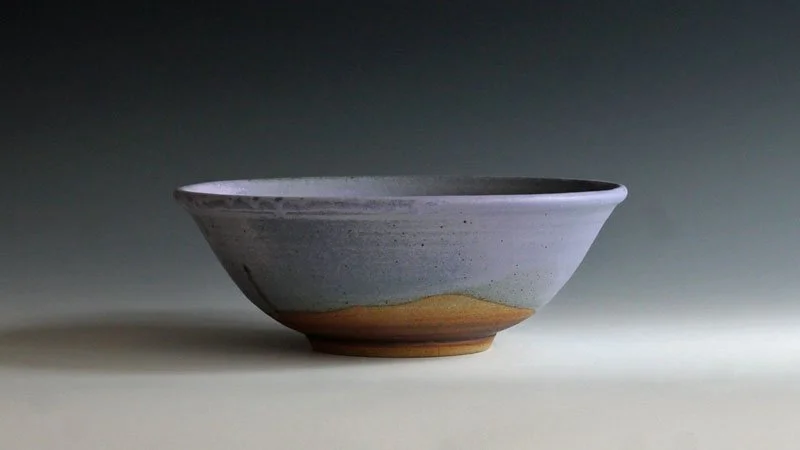
This last piece of reasoning was done by a part of my brain that operates separately from the rest of me – so much so that I don't know what it's doing sometimes. It's the same autonomous part of me who uses less and less peanut butter to make a sandwich as the jar runs out. I sit down to eat it — why does this taste different?
I went through spring and summer like this, dialing down on the gas. Tapping the damper in more and more, marking some revised settings in pencil on the damper itself, dutifully recording the tank level in my studio notebook. I should make it to fall on this fill.
Suddenly, around June, I knew I was having another kiln adventure. Pieces were coming out covered in little bumps – little pockets of gas forming randomly in the pots, like the whole claybody was slightly carbonated. I had a big pile of ruined pieces. I was calling customers and apologizing. Sorry – your order is delayed, for some reason that I can't even figure out.
Is it the clay? Have I hit a seam in my clay deposit that has more sulphur?
Finally, late summer, around the time that the USS Abraham Lincoln had been at sea for 200 days or so in the Gulf, another part of my brain woke up from a troubled summer nap. He was mad. What is happening here? I was getting ready to fire another load of pots, and didn't feel like ruining them again. I kind of watched while the newly-awakened part of me drew the damper all the way out of the kiln and carried it across the room to a workbench with good light, got a measuring tape and compared the faint but still visible graduations marked out by Paul Geil, the manufacturer, for 1”, 2”, 3”, of opening. Then I compared these to the pencil marks I'd added recently – geez. I am firing the kiln with just over an inch of damper opening in some phases. That's crazy. That is not economy, and no wonder the pots are bubbling. They literally are carbonated, I learned, after some long hot summer afternoons reading The Potter’s Dictionary of Ceramic Materials and Techniques, the comprehensive reference by Janet & Frank Hamer.
Turns out the pots depend on a long phase, from about 800 to over 1600 F, during which carbonaceous material in their claybody can break down, combine with oxygen to make carbon dioxide, and then float harmlessly away. If this doesn't happen when it should it happens later, when vitrification is occurring, and the gas gets trapped and just makes bubbles.
That's useful science. But I also want to pause for a moment and ponder these two different parts of my brain. The one is dutiful, careful, and has been running things in the studio recently. The midterm elections, the international news – enough uncertainty this year to make you buckle your seatbelt, grip the steering wheel, and slow to a crawl. That other part of me who dozed off for a while – he is someone else altogether. Cranky, sometimes funny, not so systematic. Saturnine, impatient, or, at least, easily bored. Person #2. The artist. A part that everybody has.
October arrived and the Frijoles Fire, close to my neighborhood, was starting to get contained. I had a bounce back in my step. I had fired my kiln and gotten some okay work out. I was eager to repeat the new damper settings to confirm I'd solved the bubbling issue – that I'd correctly identified my false economy. Humming a little tune, I lit the kiln & went to get a few hours' sleep. At four in the morning I was back in the studio, ready for a great firing, adventure over.
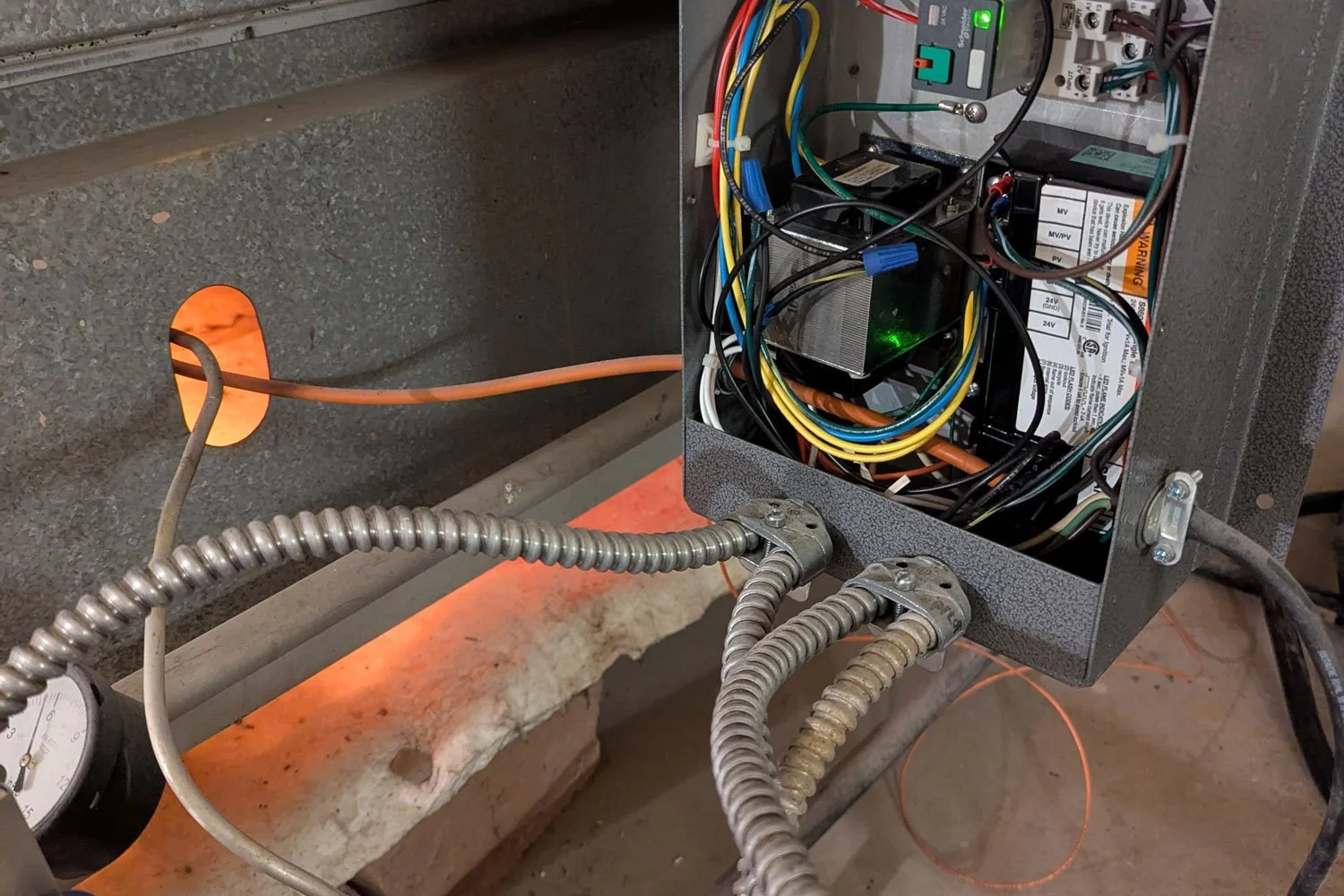
But what is happening here? The kiln has fallen way behind where it should be. The gas valve is open full, and just a whisper of propane is coming out. Now what? The glowing red-hot pots, their glazes on the point of melting, slowly are cooling and the room is eerily quiet. Has the propane run out? I walked into the yard with a flashlight & checked. Maybe something with one of those new components in the control box? I unscrewed the lid. A loose wire?
Why don't you contact the manufacturer, my son suggested when he woke up a few hours later. He was visiting.
I would but that never works. You can never get through! I'll just have to figure this out on my own.
Email? My son said calmly. He was sitting on the couch, legs stretched out, drinking coffee and writing grad school applications on his laptop. Hmm I admitted. Okay, good idea.
The email response came back quickly & I read it out loud:
From what you are saying, it sounds like the signal conditioner. You can verify this if you remove the cap off the modulating valve. You will see two screws, if you have the controller calling for full gas, you should see approximately 20 volts across these.
I shook my head. There's no way it's the signal conditioner. There's something else going on.
My son is used to this impetuous person #2 behavior. Dad, you don't know what the problem is yet. Don't try to solve it, just do what they say. Take the voltage readings and send them the information.
I sighed. Okay. Can you help? I don't know if I even have a voltmeter.
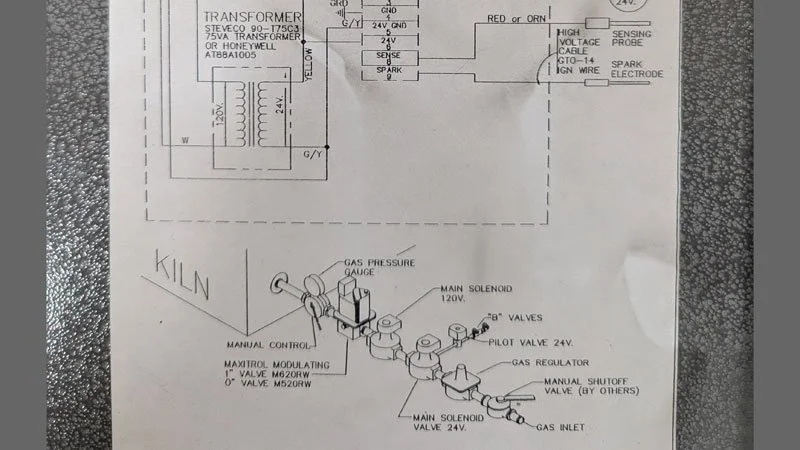
A trip to the hardware store, stopping of course at El Parasol and Kokoman on the way back, and sure enough, the voltage was reading low. Two days later a new signal conditioner arrived in the mail, and a few days after that, the bounce was back in my step. Finally. I can get this firing going. The gas valve was working great.
Until about 2150 F – about 200 degrees from the end of the firing. It was about two in the afternoon on a cold fall day, and the kiln just spontaneously shut itself off. I stood there before it, my heart starting to pound. All those pots. I thought this kiln adventure was over. I'm ready for this whole year to be over. I put on gloves and reached under the kiln, threading my hand between the red-hot burners. What is happening here? Why won’t the pilot flame stay lit? I tried restarting. I tried again. I was sweating.
Putting in my earbuds and starting to pace the room, I called Geil Kilns. Hello? The familiar voice of the office manager.
I would like to talk to Paul, please, I said, my voice a little rough, none of the usual courtesy, like Bob Dylan on a bad day. Or so I hoped. This was an impossible request of course, nobody can call Geil Kilns and just get put straight through to Paul.
Hi buddy, Paul said a moment later.
Hi. Something's wrong with that new signal conditioner. The kiln keeps shutting down.
Shutting down? That doesn't have to do with the signal conditioner. Is the pilot flame lit?
No, that’s the problem, it won’t stay lit, everything is shutting down and not working!
Well, that's a whole separate control module that runs the pilot ring, Paul said. That's a whole separate circuit.
Oh.
It’s in that lower control box.
I started to calm down, and Paul stayed on the phone for twenty minutes. See that black plastic box? It should say Honeywell on it. You see that little green LED?
Yes. I can see that.
Is it blinking?
Turns out a pattern of six blinks and then a pause means a fault with the flame rod, either because it has gotten covered in soot, a likely result with propane, or because it is no longer touching the pilot flame, or because it is touching metal. It has to be one of those three things, Paul explained. I took a deep breath. Down in the bright orange heat under the kiln, when I touched the little copper part with vice grips, I saw it had loosened. And was touching something metal.
An hour later the kiln was roaring again, with a lot of ground to make up before the glazes could finish melting & this adventure could finally be over. I have a notebook I keep in my studio to record firing progress, damper settings, glaze formulas, and how much propane I have left — and then I have another notebook kept in the house where I record the kind of random thoughts you have in the middle of the night. I guess person #2 needs his own notebook.
While the kiln cooled, and I waited and slept, as though to add a coda to this year-long kiln adventure, I jotted down a dream:
Driving in downtown Santa Fe. In my old car, the Corolla I got after high school, whose tank cost only twelve dollars to fill. Partly because gas was cheap, and partly because just a few gallons would take you a very long way – you'd only be going fifty-five. I’m just about to turn onto West San Francisco Street, Bob Dylan is in the passenger seat, talking about his next gig, I am giving him a ride there. Canned Heat — he will be playing with some of the members of that band, and he’s talking about them, telling me their names. Oh, I say, driving along, and listening, while Bob talks.
What is happening here? What does this dream mean — if that's even the right word. I'm always pointing out in classes that ceramic pieces don’t always have to 'mean' anything or be useful, or even have to be beautiful sometimes. Sometimes it is okay for them just to be.
Dreams are this way too, maybe, sometimes one just is, without foretelling the future or illuminating one’s shadow side. Sometimes a dream is just a punctuation mark, or is just making a joke...
Ah. Suddenly I get it. Canned Heat.
What is canned heat?
Haha very funny. Canned heat is propane.