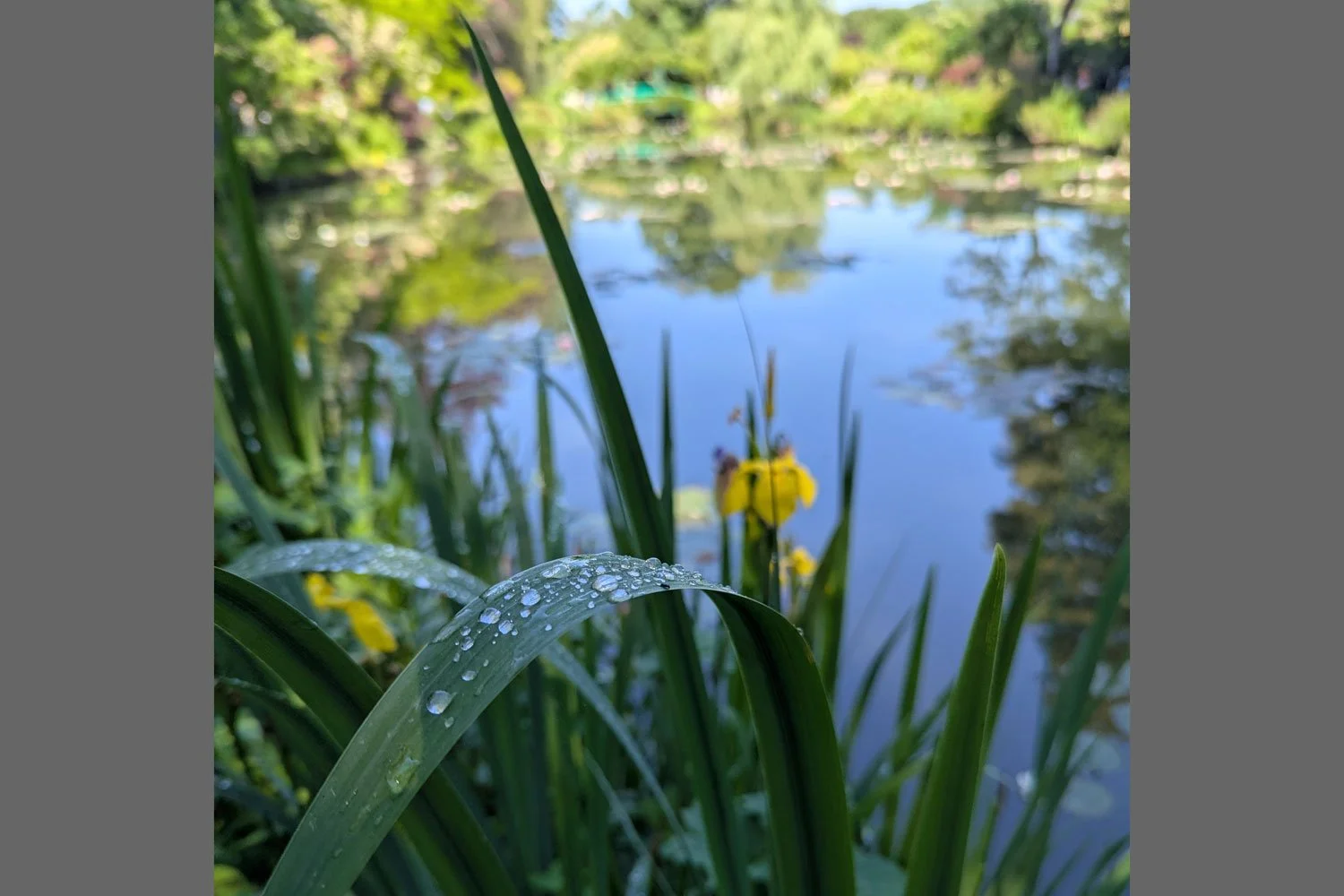
Giverny
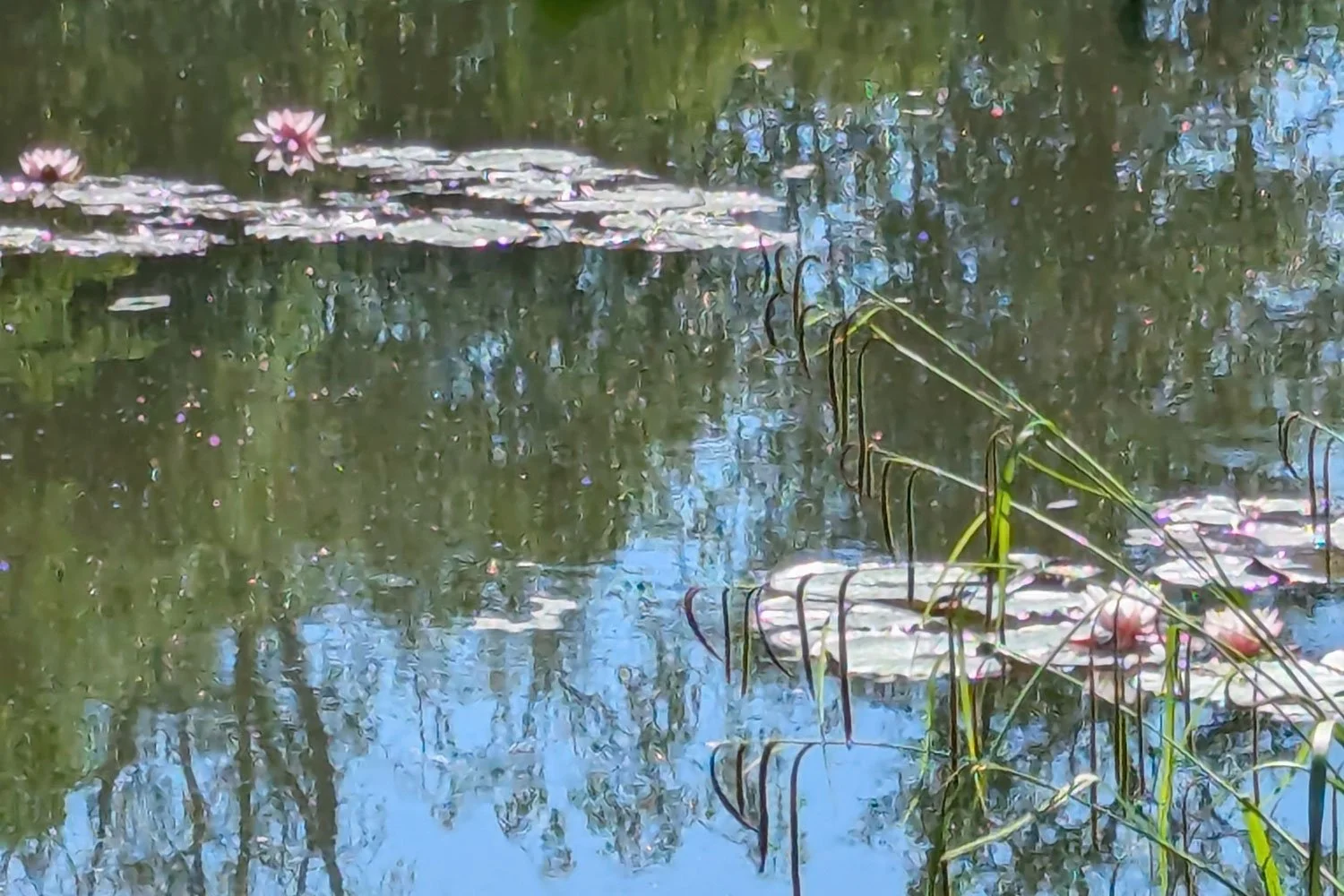
This spring I took a couple weeks off from the studio – I went to France. In preparation I read a book about Monet, specifically about his painting of the water lilies, at Giverny, in the last part of his life. Turns out these serene, large, meditative, images of light and water, sometimes so fleeting & layered as to be almost abstract, were the result of slow, methodical, work. Not at all what they seem. Turns out Monet's dream of capturing the impression of a passing moment might in reality require sixty work sessions. The soothing & vibrating happiness of the water lilies was created, it turns out, by a grumpy neurasthenic, prone to rage, beset by finicky technical problems with color, who sometimes put his foot through a canvas he'd been working on all day or threw his paintbox into the river and then had to order a new one to be sent on the next train from Paris.
I liked reading this because recently I've encountered technical challenges in my studio and have lost a lot of otherwise good pots to a complicated problem with the kiln. Not that I'm richly talented or a famous artist like Monet. And, not that I'm prone to rage. But this is why it's good to read biographies of the famous – you learn not that you're anything like them, but, that they're just a little bit like you. They have troubles & anxieties, they waste a lot of time too, and produce work that's so bad it just needs to be discarded.
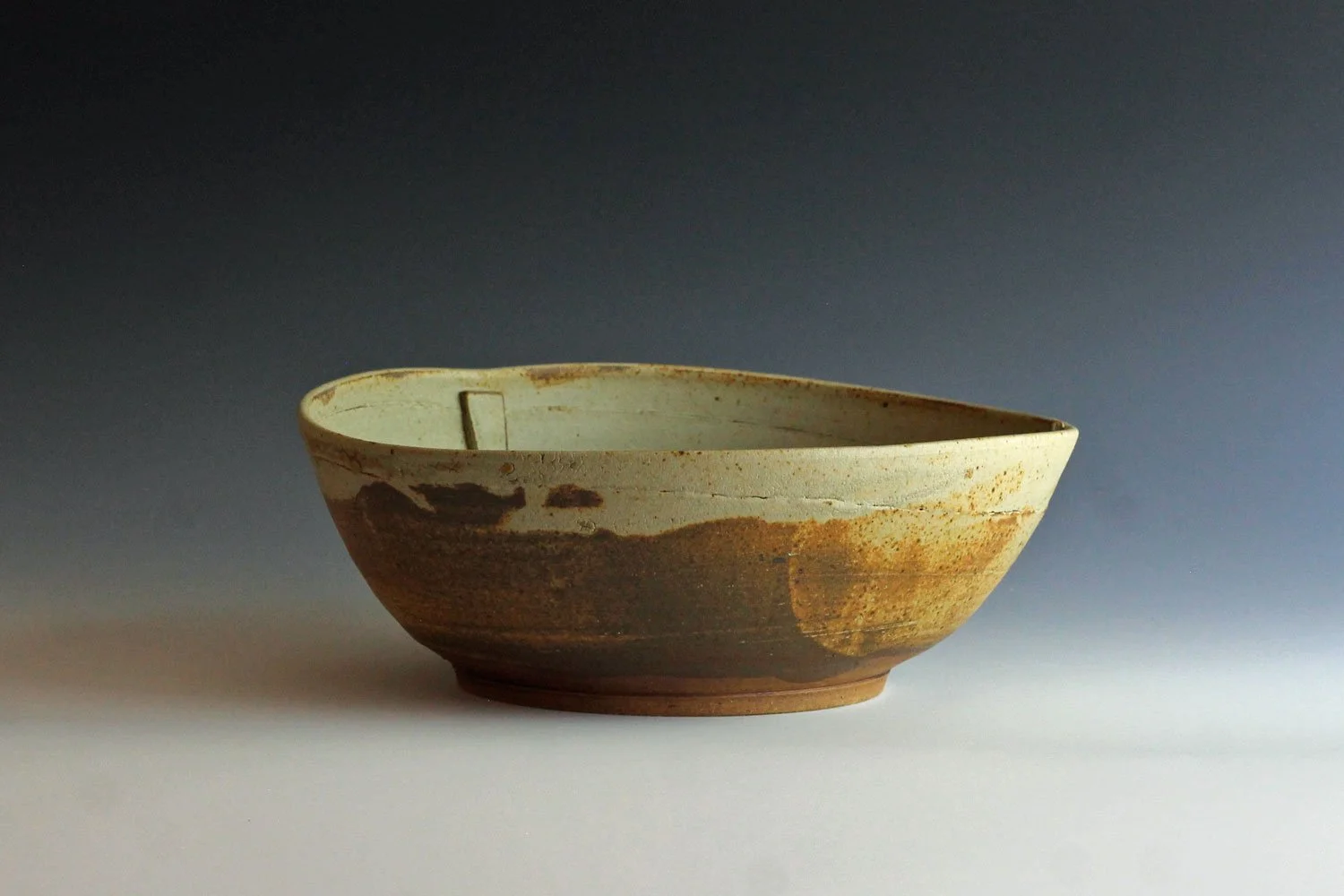
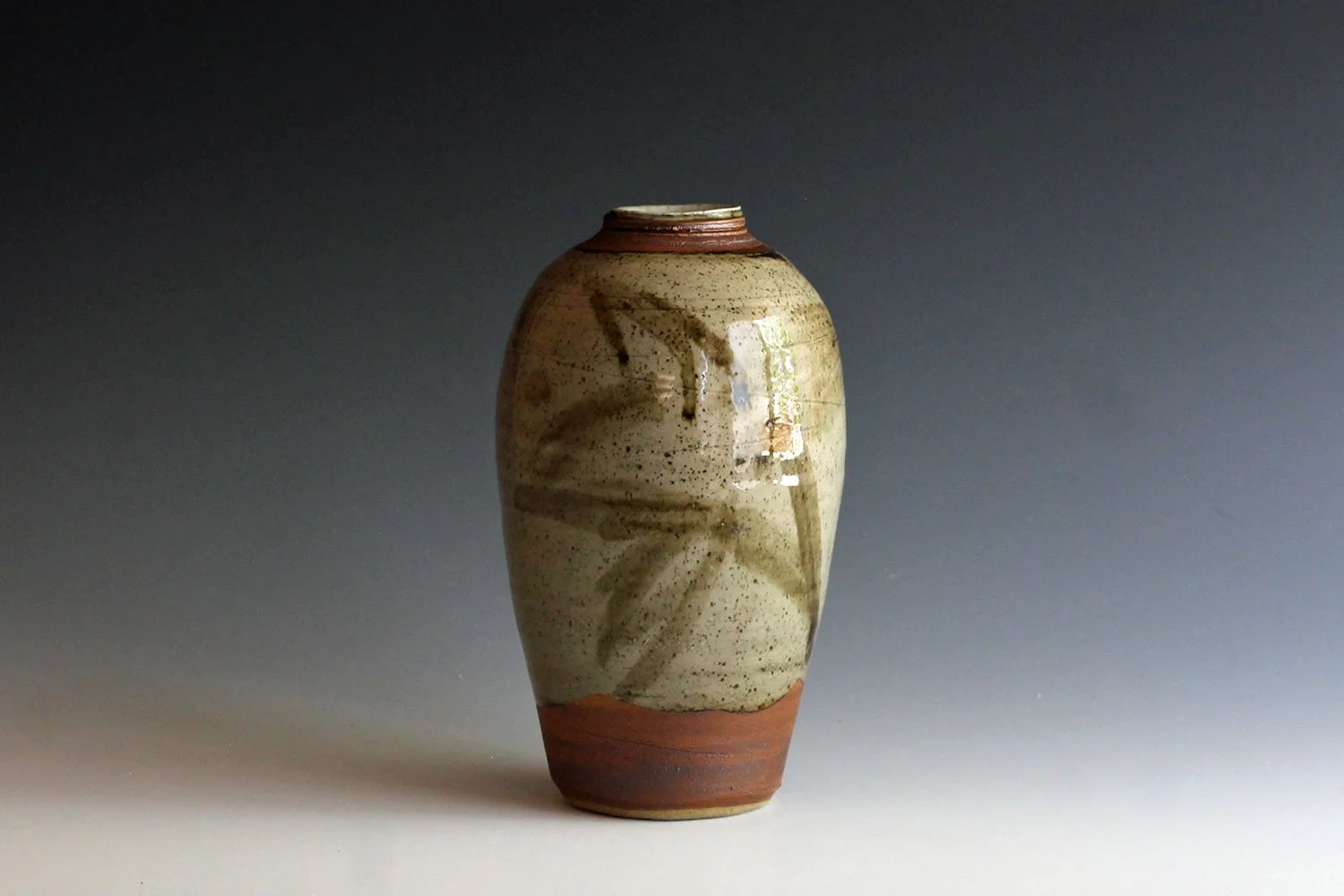
It takes a long time to melt the glazes on the stoneware pots I make, and with each firing I record the number of hours along with the number of shelves placed in the kiln, the positions of the big pieces relative to the small ones, and the behavior of the kiln itself as it approaches temperature. The hope is that after twenty or thirty firings you learn the pattern, you get so you can maximize the rich dark transformed look you're after, from your glazes, and get this to occur evenly throughout all the shelves – not just having the work look good in the top back corner, for example, which is a common high-fire kiln problem.
I've had thirty-nine pretty good firings in this kiln over the last four years or so. For whatever reason, or interlocking set of reasons, that has changed this year. The kiln stalls, it takes forever, the pots bloat. To eliminate one potential source of trouble I decided, before leaving for France, to start mixing my batches of clay just with commercially-mined ingredients rather than using my own hand-dug local clay. Maybe after all these years I've hit a spot in the seam up in Abiquiu that has a lot of impurities – maybe that's causing the pots to vitrify prematurely.
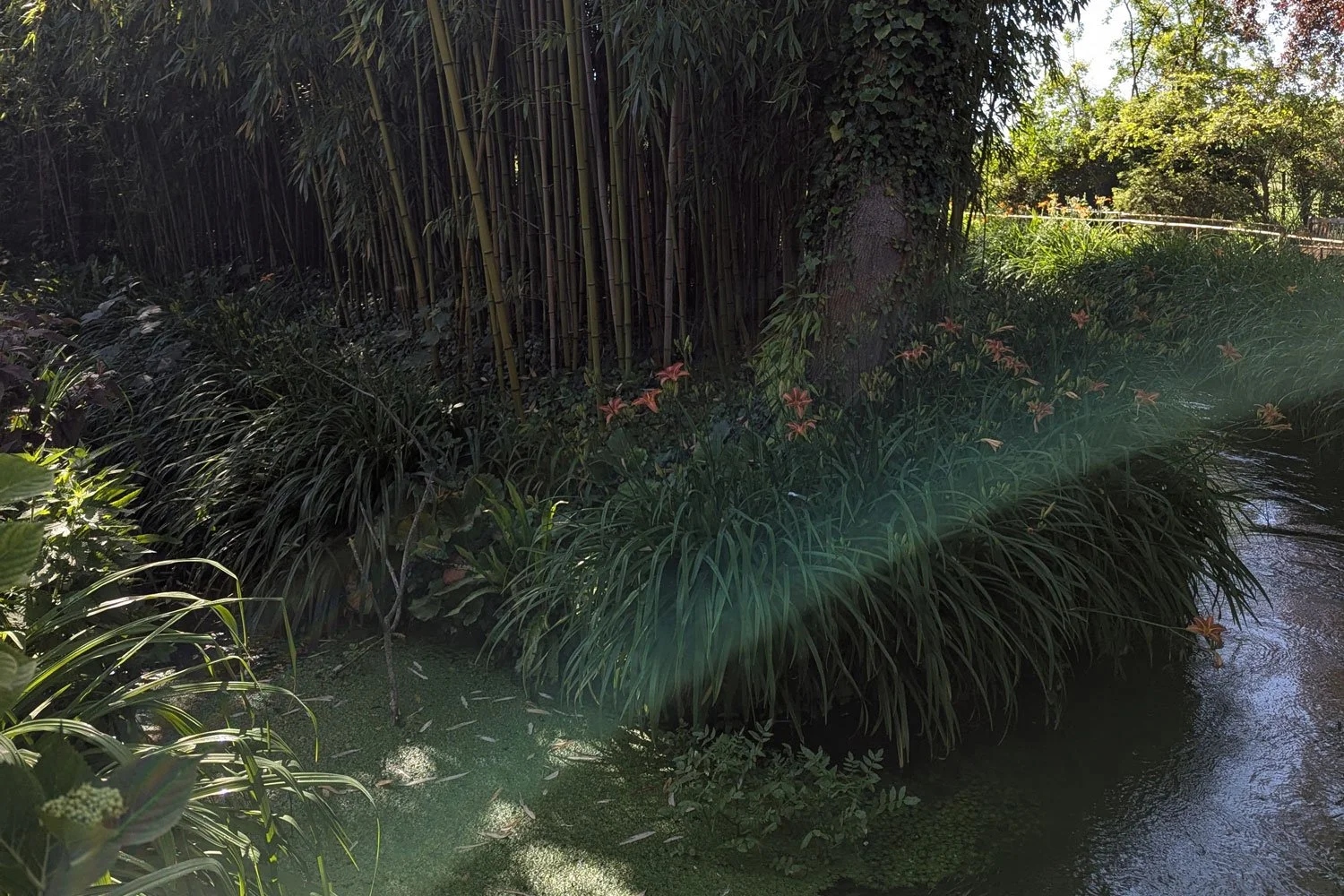
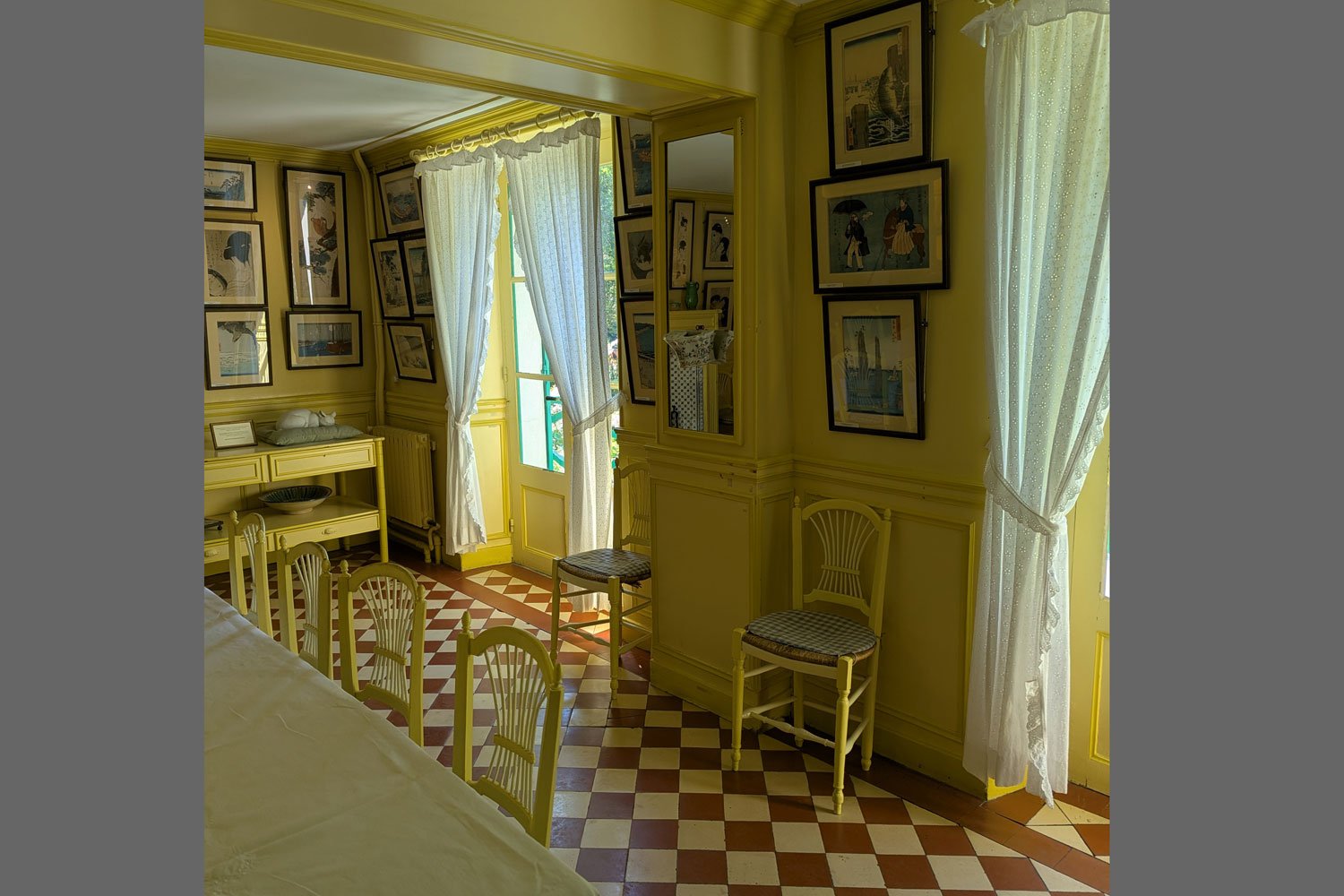
When Monet started in on the water lilies he'd been at it for a long time already. He'd had a long run as a painter, from his supposedly humble beginnings, though the biographer I read was a bit dubious of whether Monet had ever been as broke as he claimed, and he'd become a favorite producer of picturesque 'French' paintings for upscale American homes, had picked up a nice property in Giverny, conveniently located near the new rail line going direct to Paris, and had cleverly diverted the nearby Ru river to make an artificial pond in his yard. He loved gardening, routine, lunchtime, his family, and his friends. He’s a departure from the stereotypical famous painter. Monet had life-long friends. He wrote letters and went to visit people and took advice and invited people over — other painters, authors, politicians, people who could help him get cigarettes, admittedly, during the War. Renoir, Rodin, Caillebotte, Clemenceau, Manet, Pissarro. It is good to visit Giverny, where Monet’s gardens, water lilies, and home, are lovingly preserved. You can really feel his presence there, though I was disappointed that his tremendous final studio building, built somewhat controversially in 1916, is now the gift shop.
A couple days ago, back from France & still jet-lagged, stumbling out to my studio to get the mixer going, it was time to resume thinking about my intractable technical problem with the kiln, or with my clay, or both. Time to mix more clay just using ingredients you can buy and leaving out the local Abiquiu clay I’ve been using for decades. I was thinking how I also — and here is where Monet is just a little like me – have been at it for a while. It's been a many years since I've mixed a batch of clay with just ingredients that you can buy: a little stoneware from Ohio, some ball clay from Tennessee, some fire clay from Missouri. I was thinking how back when I started, and finally succeeded in building a kiln of my own, my instinct was to go find my own clay from as close to my studio as possible. To make my own pots. If I used my own clay from right around where I lived – somehow, it seemed, I could kind of just make whatever I want.
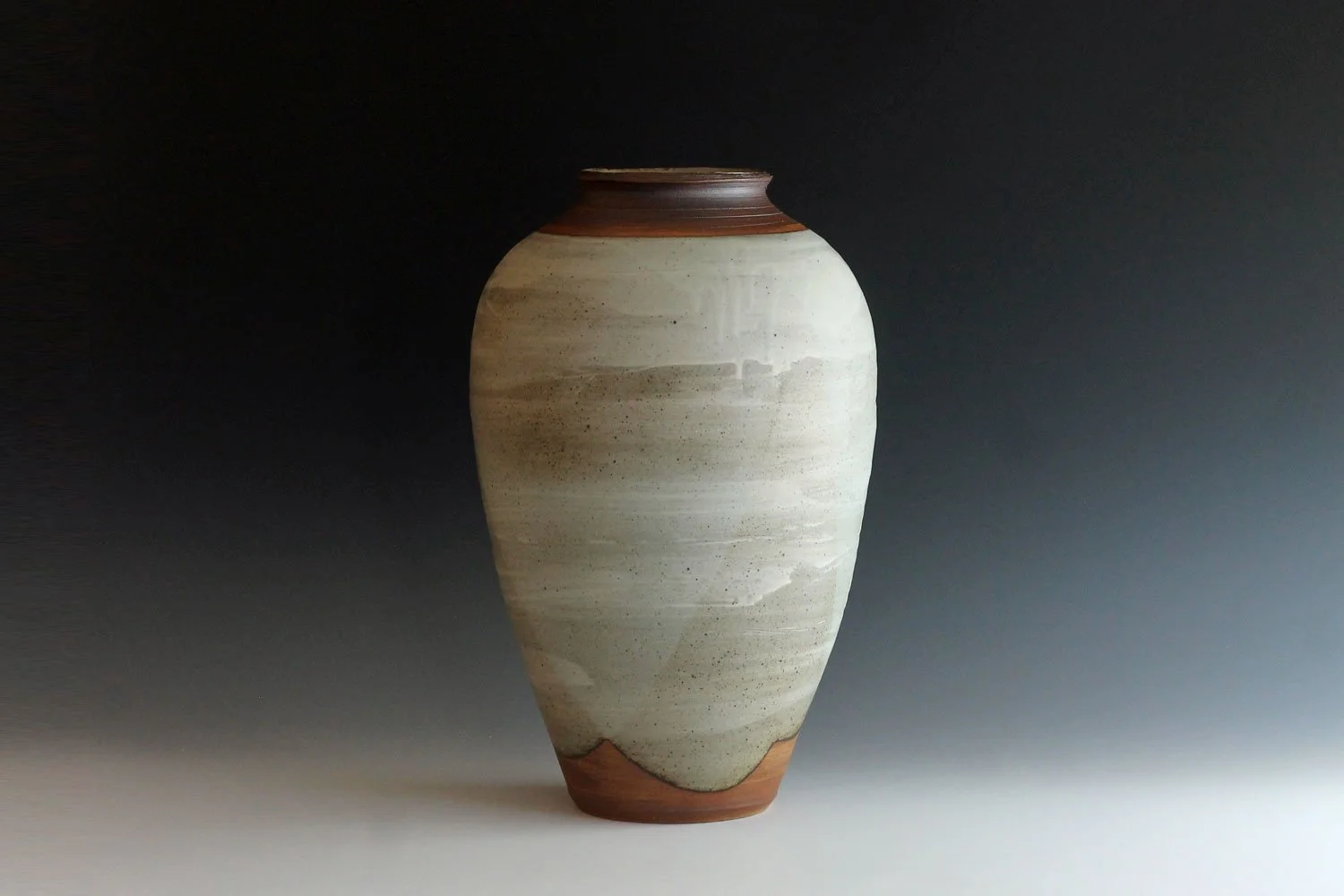
Commercially-mined clay comes as a dry powder in fifty-pound bags. A lot of it is air-floated, a process that removes anything that's not supposed to be there. You know what you're getting. It's pure. Using a screwdriver I tore some claybags open, and poured, and weighed. I'll admit that I was just as anxious and grumpy, probably, as Monet on a good day. I was thinking how over the few decades I've been digging clay & running it through my mixer to make pots the whole tone, the ethic, about getting your own clay, local clay, as I've always called it, has changed. 'Wild clay', people say now. They go and 'harvest' it. In my gallery a certain customer appears, sometimes having just parked a Sprinter van, and looks around, waterbottle in hand. Are these pots really made from wild clay? they ask eagerly. I used to be proud – using local clay used to be about freedom, about being under the radar, about connecting your pots to where you live.
Sure, I say, that's right. I dig this clay not too far from my place.
Not to be too grumpy like Monet, but something bugs me about ‘wild’ clay. Isn’t that a total projection? Clay just is, and is everywhere, and to describe it as wild means you want to see something in it that isn’t really there, a specialness, an authenticity. ‘Wild’ is a vanity, something you can concentrate on rather than on the beauty of the pot itself, and saying you’re harvesting, rather than digging or mining, clay, suggests a need to be doing something worthier than just taking away a little portion of the earth for your own personal use.
Indulging, as I tried to stay awake, mesmerized by the mixer, in these exceedingly cranky thoughts, my mood picked up. I weighed out more air-floated clay and blended and spun and drizzled a little vinegar into the big rotating drum. This is just commercial clay, I was thinking. It isn't anything. I can just make whatever I want.
As an artist you’re constantly learning to recognize your own conceit, and self-imposed constraint, and to strip it away so you can return to the essential freedom you wanted when you started. The water lilies, both the ones still growing at Giverny and on the canvasses, are teeming, fleeting, happy, and at peace. On our last day in France we visited the Marmottan Museum in Paris, which was created to display the paintings that ended up in Monet's estate after he died, I think, and that passed to his son Michael. Many of these were done during the War years and the anxiety & neurasthenia show through from Monet’s final years. We wondered if he would actually have wanted these to be displayed, though of course it was very moving to see them, it was kind of like Monet was right there with us.
As I stood at the mixer, midafternoon, right now in France it's bedtime and I can feel that, yawning behind my respirator, I felt grateful to have learned a bit about his story, and humbled by the serene happy inspiration of his work, and glad that – it's really true – in a way he was just like me.